Miguel Tinker Salas
Professor of History and Chicano/a and Latino/a Studies at Pomona College
Publications
Publications
Filter by type:

Buy It Now:


Venezuela: What Everyone Needs to Know
by Miguel Tinker Salas
In this concise, accessible addition to Oxford’s What Everyone Needs to Know® series, Miguel Tinker Salas — a native of Venezuela who has written extensively about the country — takes a broadly chronological approach that focuses especially on oil and its effects on Venezuela’s politics, economy, culture, and international relations. After an introductory section that discusses the legacy of Spanish colonialism, Tinker Salas explores the “The Era of the Gusher,” a period which began with the discovery of oil in the early twentieth century, encompassed the mid-century development and nationalization of the industry, and ended with a change of government in 1989 in response to widespread protests. The third section provides a detailed discussion of Hugo Chavez-his rise to power, his domestic political and economic policies, and his high-profile forays into international relations-as well as surveying the current landscape of Venezuela in the wake of Chavez’s death in March 2013. Arranged in a question-and-answer format that allows readers to search topics of particular interest, the book covers questions such as, who is Simón Bolívar and why is he called the George Washington of Latin America? How did the discovery of oil change Venezuela’s relationship to the U.S.? What forces where behind the coups of 1992? And how does Venezuela interact with China, Russia, and Iran?
For an excerpt from the introduction of this book, visit:
http://www.democracynow.org/blog/2015/4/9/ahead_of_summit_of_the_americas
Informative, engaging, and written by a leading expert on the country, Venezuela: What Everyone Needs to Know® offers an authoritative guide to an increasingly important player on the world stage.
Publication Details:
Buy It Now:

Una herencia que perdura, petróleo, cultura y sociedad en Venezuela
by Miguel Tinker Salas
En este libro el autor analiza el ascenso de la industria petrolera y las múltiples formas en que los intereses de las empresa extranjeras se entrecruzaron con los intereses de las clases emergentes en Venezuela. De esta forma los sectores empleados en la industria concibieron un interés de clase y un concepto de participación de la ciudadanía que dependía del éxito de la industria petrolera.
La confluencia entre poder y cultura queda claro en un emergente estilo de vida “moderno” que tenía como premisa las prácticas diarias, y las lealtades intrínsecas que fomentaba la industria petrolera en sus campos residenciales. El argumento básico de este libro es que la industria petrolera en Venezuela no funcionó como un aislado enclave de la economía de exportación, sino que ejerció una amplia influencia sobre la formación de valores políticos y sociales evidentes entre trabajadores, intelectuales y miembros de la clase media.
En este libro el autor analiza el ascenso de la industria petrolera y las múltiples formas en que los intereses de las empresa extranjeras se entrecruzaron con los intereses de las clases emergentes en Venezuela. De esta forma los sectores empleados en la industria concibieron un interés de clase y un concepto de participación de la ciudadanía que dependía del éxito de la industria petrolera.
Publication Details:
Buy It Now:
A la sombra de las águilas. Sonora y la transformación de la frontera durante el Porfiriato
by Miguel Tinker Salas
En este libro, Miguel Tinker Salas analiza las condiciones sociales y económicas que formaron la identidad sonorense. El autor realizó una minuciosa investigación en la zona de California, Arizona y Sonora, con el fin de hacernos revivir los años del Porfiriato en la frontera noroeste de México. Conflictos territoriales, riquezas mineras, intereses extranjeros, élites conservadoras, bandidos inalcanzables y una frontera no muy nítida determinaron la cultura de esta región. Tinker Salas centra su estudio en la relación de Sonora con el suroeste de los Estados Unidos que, lejos de ser unidireccional, fue una interacción viva entre dos culturas, dos economías, dos pensamientos modernizadores diferentes. Este proceso culminó con la Revolución mexicana, misma que llevó a varios sonorenses, y con ellos a su cultura, a Palacio Nacional.
En este libro, Miguel Tinker Salas analiza las condiciones sociales y económicas que formaron la identidad sonorense. El autor realizó […]
Publication Details:
Buy It Now:

The Enduring Legacy: Oil, Culture, and Society in Venezuela
by Miguel Tinker Salas
Oil has played a major role in Venezuela’s economy since the first gusher was discovered along Lake Maracaibo in 1922. As Miguel Tinker Salas demonstrates, oil has also transformed the country’s social, cultural, and political landscapes. In The Enduring Legacy, Tinker Salas traces the history of the oil industry’s rise in Venezuela from the beginning of the twentieth century, paying particular attention to the experiences and perceptions of industry employees, both foreign and Venezuelan. He reveals how class ambitions and corporate interests combined to reshape many Venezuelans’ ideas of citizenship. Middle-class Venezuelans embraced the oil industry from the start, anticipating that it would transform the country by introducing modern technology, sparking economic development, and breaking the landed elites’ stranglehold. Eventually Venezuelan employees of the industry found that their benefits, including relatively high salaries, fueled loyalty to the oil companies. That loyalty sometimes trumped allegiance to the nation-state.
North American and British petroleum companies, seeking to maintain their stakes in Venezuela, promoted the idea that their interests were synonymous with national development. They set up oil camps—residential communities to house their workers—that brought Venezuelan employees together with workers from the United States and Britain, and eventually with Chinese, West Indian, and Mexican migrants as well. Through the camps, the companies offered not just housing but also schooling, leisure activities, and acculturation into a structured, corporate way of life. Tinker Salas contends that these practices shaped the heart and soul of generations of Venezuelans whom the industry provided with access to a middle-class lifestyle. His interest in how oil suffused the consciousness of Venezuela is personal: Tinker Salas was born and raised in one of its oil camps.
Oil has played a major role in Venezuela’s economy since the first gusher was discovered along Lake Maracaibo in 1922. […]
Publication Details:
Buy It Now:
Venezuela: Hugo Chavez and the Decline of an Exceptional Democracy
by Miguel Tinker Salas; Steve Ellner
This authoritative book offers a comprehensive assessment of contemporary Venezuela. Analyzing the multifaceted phenomenon of Hugo Chavez, leading scholars move beyond his flamboyant style to focus on the concerns of popular social and political movements. The book challenges the misleading notions that for several decades glorified Venezuelan exceptionalism and minimized the role of important actors. After setting the historical and socio-economic contexts, the contributors explore racial issues, social and labor movements, electoral politics, economic and oil policy, and United States support for the Venezuelan opposition. Underscoring the complexity of Chavez and his popularity, the book highlights the need to avoid simplistic assessments of the past and present and offers a clear-eyed understanding of Venezuelan reality today.
This authoritative book offers a comprehensive assessment of contemporary Venezuela. Analyzing the multifaceted phenomenon of Hugo Chavez, leading scholars move […]
Publication Details:
Buy It Now:
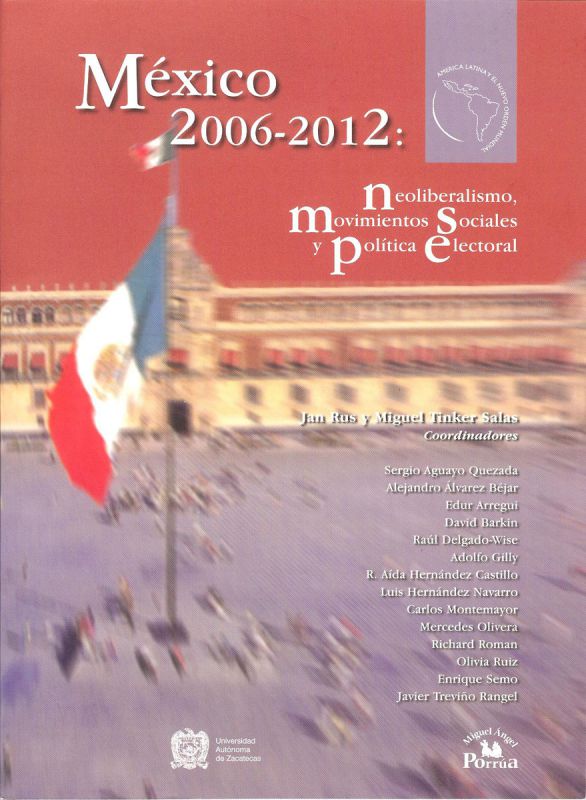
Mexico 2006-2012: Neoliberalismo, Movimientos Sociales y Política Electoral
by Miguel Tinker Salas; Jan Rus
Este libro trata de los grandes problemas nacionales que llevaron al rechazo popular al PRI en el año 2000 siguen sin resolverse. Las áreas de salud, educación y servicios humanos básicos están en muy malas condiciones. La lucha en Chiapas, que inspiró movimientos a lo largo de Latinoamérica sigue pendiente, mientras que los sindicatos, en su mayoría corruptos y controlados por el PRI, mantienen su poder y han ayudado a Vicente Fox a ejercer control sobre sus trabajadores, al tiempo que los medios de comunicación , controlados por poderosos intereses, han intentado llenar el vacío ante la incapacidad del gobierno para responder a los problemas del país. Una visión crítica y novedosa de las diferentes aristas que vive en la actualidad México al término del primer gobierno de alternancia política.
Este libro trata de los grandes problemas nacionales que llevaron al rechazo popular al PRI en el año 2000 siguen […]
Publication Details:
Buy It Now:
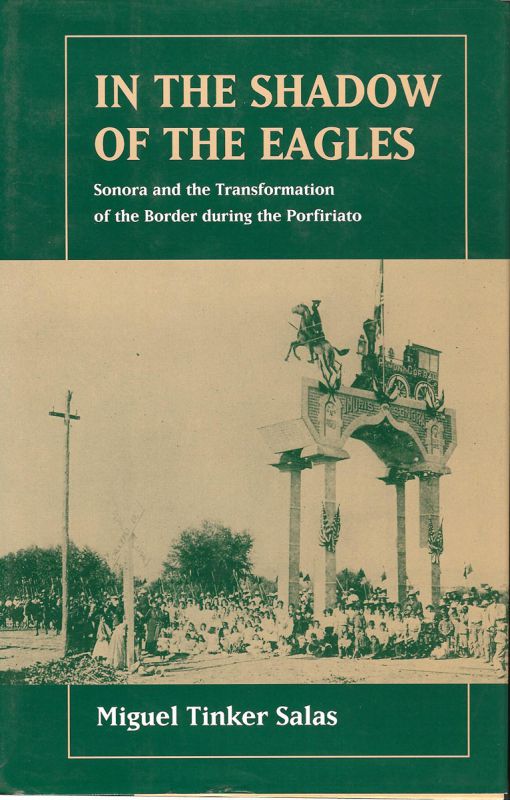
In the Shadow of the Eagles: Sonora and the Transformation of the Border During the Porfiriato
by Miguel Tinker Salas
In the Shadow of the Eagles considers the historical roots of Mexican border society. In this innovative synthesis of Mexican, border, and western history, Miguel Tinker Salas traces the social and economic history of the Sonora border region and shows the role played by the United States in the economy of Mexico. Drawing on extensive research in Mexico City, Sonora, Arizona, and California, Tinker Salas contributes original discussions of the development of regional credit practices, the elite’s use of violence as a political tool to preserve autonomy, the effects of class, race, and gender in Sonoran society, and the influence of the railroad and mining on the border economy. Balancing theory with original empirical data in a strong, readable narrative, In the Shadow of the Eagles recasts our understanding of regional Mexican history and expands our ideas about the borderlands.
In the Shadow of the Eagles considers the historical roots of Mexican border society. In this innovative synthesis of Mexican, […]